
The Flag on the Porch

I put up a Canadian flag on Flag Day last February. Just a medium-sized one I bought on Amazon, nothing special. I mounted it above the stairs leading to the front porch. My daughter noticed it and didn’t say anything, which I think means she understood. I’m not entirely sure I understood it myself.
I’ve never been the flag-waving type. Canadians tend to be suspicious of that impulse, wary of anyone who needs to announce too loudly what they are.
There was a complication, of course. Not long before, that same flag had been everywhere during the freedom convoy protests, draped over trucks, worn as capes, planted in snowbanks outside Parliament. For a while, it felt as if a particular kind of Canadian had claimed it, and the rest of us had quietly stepped back. Seeing it produced a kind of revulsion in me that I didn’t entirely understand. It took time to sort out.
I see putting one on my own porch as a small act of reclamation. In my opinion, the flag doesn’t belong to one fixed idea of Canada. It belongs to a country still arguing with itself about what it wants to be.
Talk of Canada as a 51st state sharpened that feeling. Whatever Canada is, it is its own unfinished thing, not a draft of something else. I wasn’t planting it for a faction. I was planting it for the healthcare card, the apologizing, and the way this country has always been slightly embarrassed by itself. That felt like mine.
There’s an old CBC Radio contest I have never forgotten. In 1972, Peter Gzowski asked listeners to finish the phrase “As Canadian as…” The winning answer was “as Canadian as possible under the circumstances.”
I’ve always loved that line. There is something in it that feels truer than the polished versions of national identity. Canadian identity has always had a slightly provisional quality, aware of itself without being loud about it. I have never thought that was a weakness.
My father’s family has been in Canada since the 1790s. Most people find that less interesting than I do. But it means something when I try to understand why the flag felt necessary in February.
When I was a kid, we had picnics at Queenston Heights Park under the monument to Isaac Brock. Some of my ancestors had served under him in the War of 1812. One even wrote a battle hymn. I grew up in the shadow of a monument to a man my family had actually known.
As a child, I absorbed a version of Canada where history started with settlers, soldiers, and monuments. It took me too long to understand that the land my ancestors defended, with decisive help from Tecumseh, had already sustained nations for thousands of years. The map I was given was real enough, but incomplete.
But the War of 1812 did pose a question that still matters: would this place be absorbed into something larger and louder, or remain itself in some unfinished form? My ancestors committed themselves to that question while the answer was still uncertain.
That kind of quiet commitment runs through my family. I see it again in the man whose name I carry.
My middle name is Beckton. I got it from an uncle who died the year before I was born, so I never met him. But I grew up hearing about him. By all accounts he was gentle, quiet, and decent, the kind of person a family does not forget.
When World War II began he was older than many of the men enlisting, but he volunteered for the Royal Canadian Air Force anyway. He was badly injured in a plane crash in Egypt during the North African campaign. Later they sent him to fly supply missions over the Himalayas between Burma and China. I have tried to imagine what that felt like and cannot quite get there.
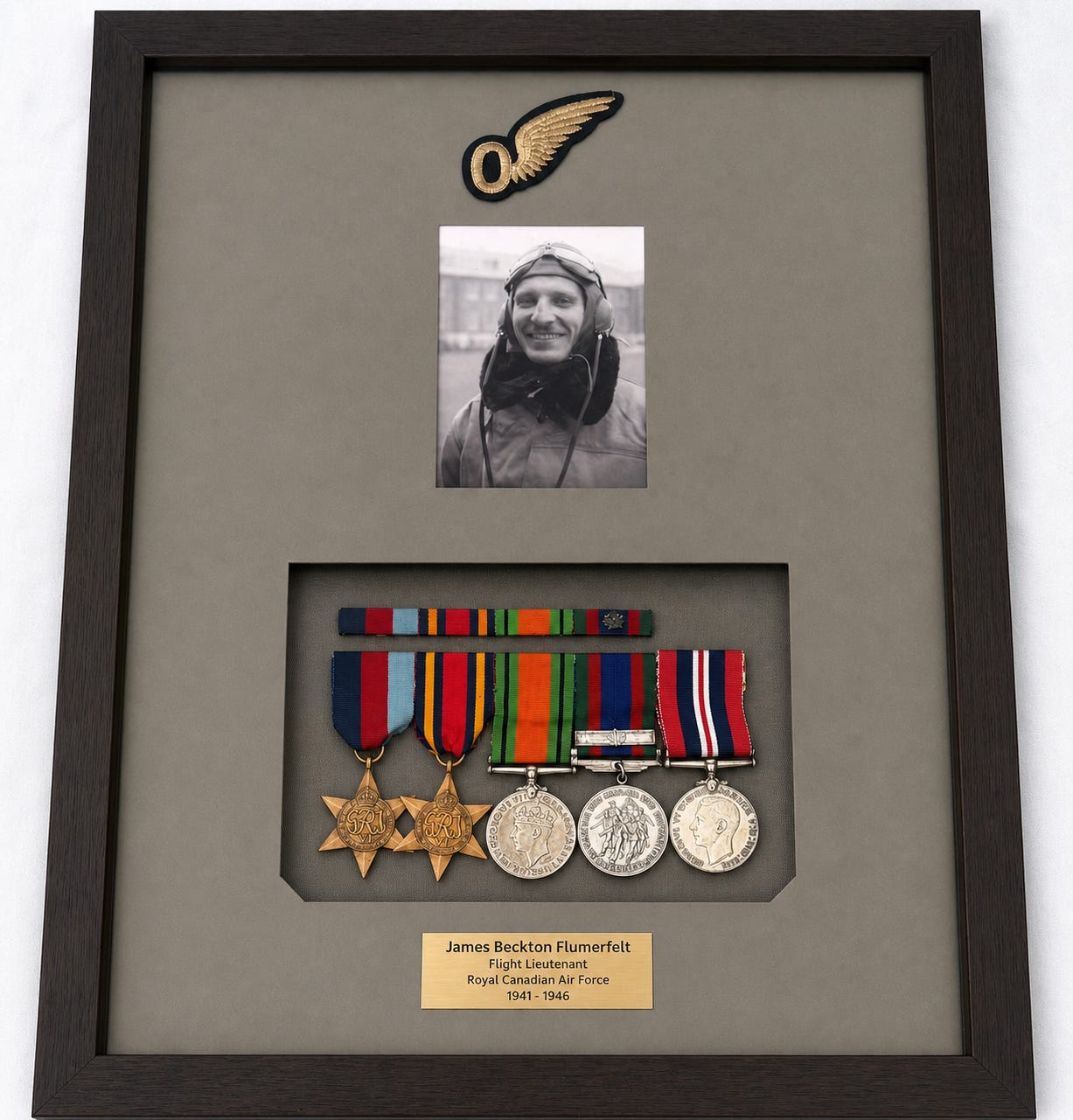
What kept him going, relatives said, was the thought of coming home. Not to anything dramatic. To his family, and to playing the organ in his church. That was enough.
He made it. He came home, played his organ, lived his life. Last year his granddaughter sent me his belongings from the war because I carry his name. His photograph is on the wall of my study. His diary is in my desk. I still find myself returning to it.
I’m not entirely sure why any of this makes me feel more Canadian. But it does.
When I think about what it means to be Canadian, I can’t entirely separate it from not being American. Not out of hostility. Half my family lives in the United States, including my sister and two American-born nephews. But there is a difference, and Canadians have felt it for a long time.
Pierre Trudeau once described living next to the United States as being like sleeping with an elephant. Every twitch and grunt affects you whether you like it or not. He meant it politically and economically, but it is true culturally too. American money, American certainty, the conviction that louder is truer. It all crosses the border. You notice it, and you notice that you are not quite it.
Part of what makes me feel other is the land itself. When I try to locate where I feel most at home, it is not a beach I reach for. It is a dock on a Georgian Bay lake at seven in the morning, granite pushing through the tree line, a loon somewhere in the mist. Something about that landscape gets into you when you are young and never entirely leaves.
The things I value most about this country are almost embarrassingly ordinary. The fact that I can show up to a hospital when I am ill and nobody asks for my credit card. The way people apologize to furniture they have bumped into. The way political disagreement is still mostly conducted in words.
Even Canadian Confederation was less a grand declaration than a negotiation among people who did not entirely trust one another. I am not sure that is a flaw. It may be the most honest thing about us.
I learned something else about Canada after my first year of university, when I spent four months in Alberta. I had thought of myself simply as Canadian and assumed most people felt the same way.
I arrived not long after the mayor of Calgary had made pointed remarks about bums and creeps from Ontario stealing Alberta jobs. I remember thinking: I’m Canadian, what is he talking about?
Within a week I understood what he meant. Alberta did not feel like a different province. It felt like a different country that had agreed, somewhat reluctantly, to share a currency.
Getting a job was the first lesson. I had been telling employers I was a student from the University of Western Ontario. Nobody hired me. A friend suggested a new approach: say I was unemployed and from Calgary. I had a job washing dishes by the end of the day.
So what was the flag about?
I think it was about gratitude. Not chest-thumping pride. The quieter kind that does not need to announce itself.
The healthcare card in my wallet. Elections that have always, without drama, produced a result people accepted. The sense that this difficult, improvised country still works more often than not.
The convoy protesters thought they were taking the flag back. Maybe they did, for a while. But a flag that has meant different things to different people for over 60 years is not easy to own.
It belongs to everyone still working out what this place is.
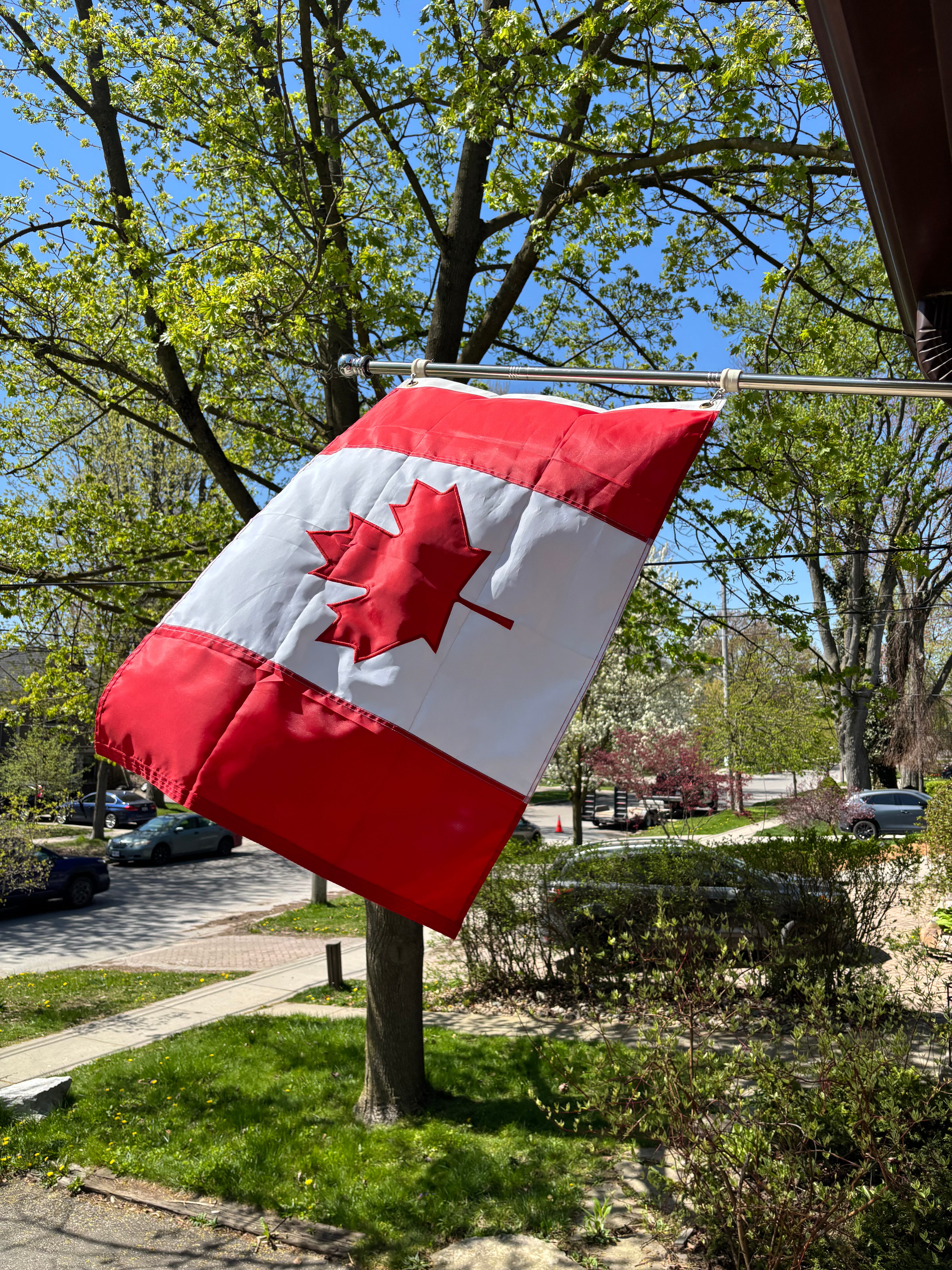
The flag is still on the porch. It’s staying.